


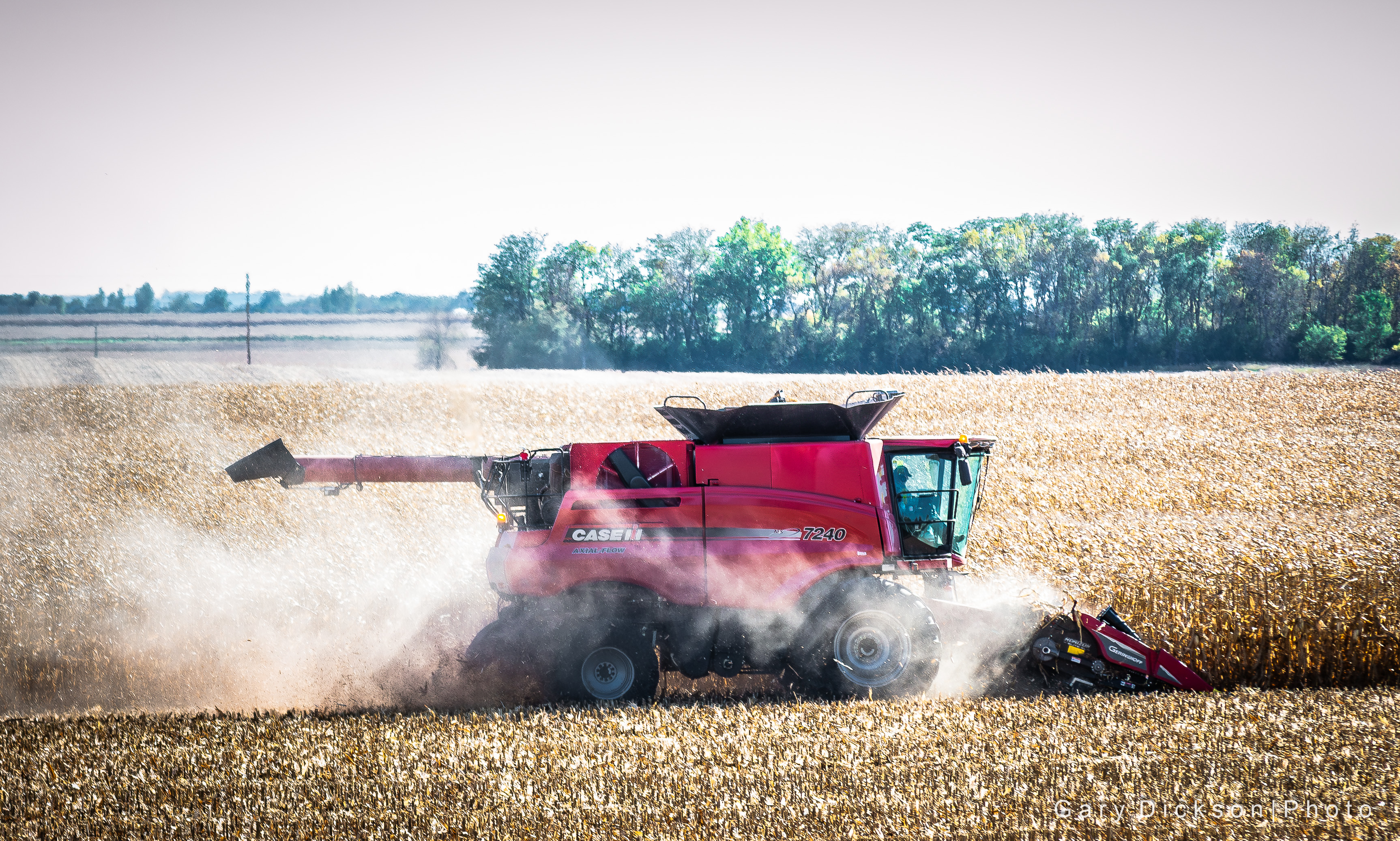
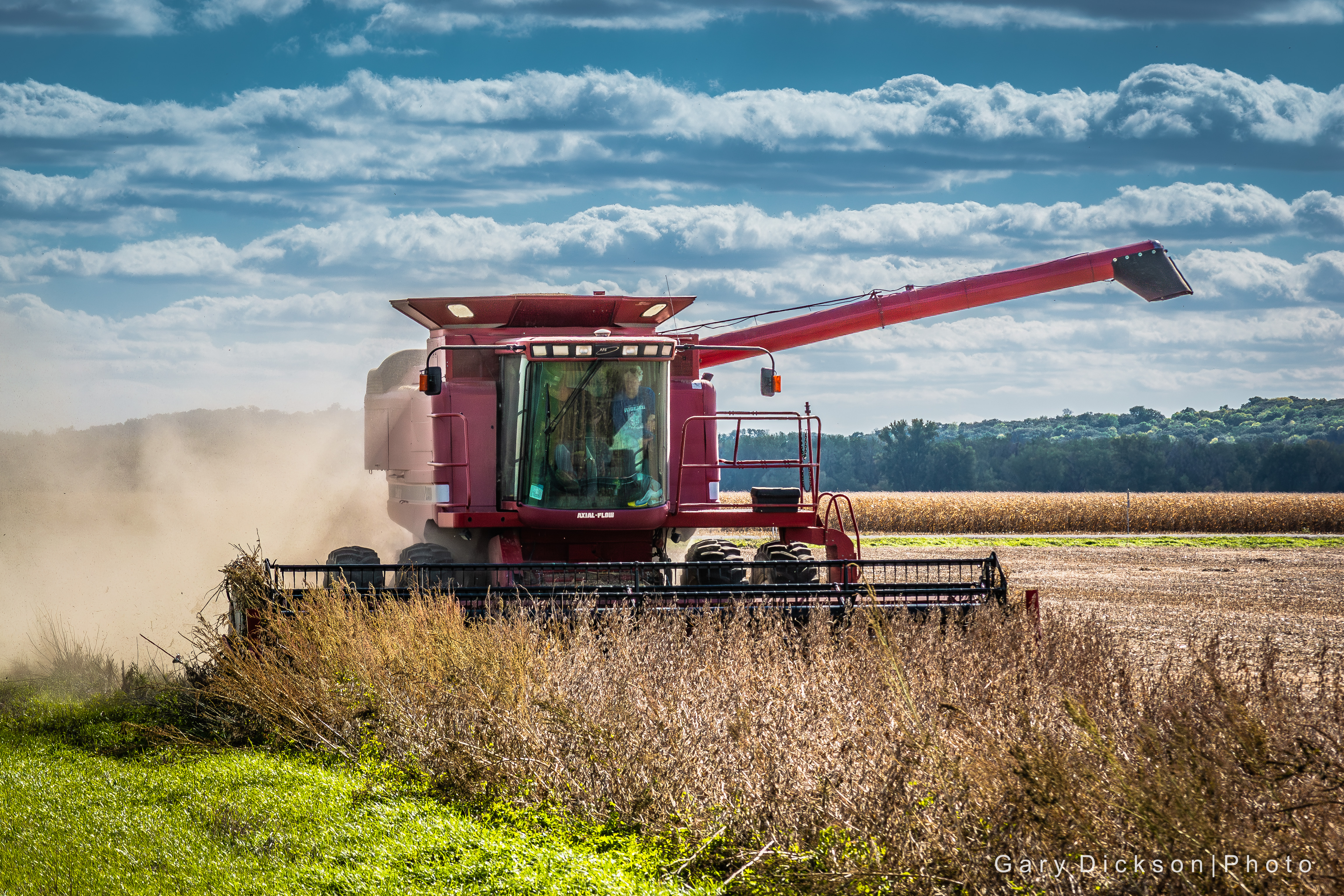
If you’ve been driving outside of town anywhere in Siouxland the last week or so, you’ve likely noticed combines out in the fields. And if you’ve been on the secondary roads in South Dakota, Iowa or Nebraska you’ve probably encountered farm machinery or trucks going between fields or transporting corn or soybeans to the nearest elevator.
Yup, it’s that time of year in Siouxland.
I’m not a farmer, but I’m always curious as to how harvest is going for those that are. Especially when our local TV meteorologists are forecasting heavy rain for later in the week. And I’ll bet some of you readers have an interest, passing or otherwise in how the corn and soybean harvest is going, too. So let’s get down to it.
Field Conditions
According to the United States Department of Agriculture’s (USDA) National Agricultural Statistics Service in Sioux Falls, for the week ending October 8, there were 5.9 days suitable for fieldwork for South Dakota. Topsoil moisture supplies rated 9 percent very short, 25 percent short, 62 percent adequate, and 4 percent surplus. Subsoil moisture supplies rated 14 percent very short, 31 percent short, 52 percent adequate, and 3 percent surplus.
In Iowa, the Des Moines USDA National Agricultural Statistics Service reported that the state’s topsoil moisture condition rated 32 percent very short, 44 percent short, 23 percent adequate and 1 percent surplus. Subsoil moisture condition rated 37 percent very short, 43 percent short, 19 percent adequate and 1 percent surplus.
Field Crops Report
In South Dakota, corn condition was rated 5 percent very poor, 12 percent poor, 34 percent fair, 40 percent good, and 9 percent excellent. Corn maturity was 92 percent, ahead of 86 percent last year and 80 percent for the five-year average.
Corn harvested was 26 percent, which was equal to last year, and ahead of the 21 percent average.
Iowa, on the other hand, saw corn maturity reach 96 percent this week, 8 days ahead of last year and 11 days ahead of the 5-year average. In the northwest district of the state, corn maturity was at 99 percent.
Corn harvested for grain reached 30 percent statewide, 5 days ahead of last year and 6 days ahead of the average. But in the northwest district, only 26 percent of the corn had been harvested for grain. The moisture content of field corn being harvested for grain was at 19 percent. Corn condition declined slightly to 48 percent good to excellent.
Soybean conditions in South Dakota were rated 5 percent very poor, 13 percent poor, 37 percent fair, 38 percent good, and 7 percent excellent. Soybeans dropping leaves was 96 percent, which was equal to last year, and near the 94 percent average.
The amount of soybeans harvested was 48 percent, which was a bit below last year’s near 52 percent and above the 44 percent average.
Over in Iowa, soybeans dropping leaves was at 94 percent this week, 3 days ahead of last year and 5 days ahead of the average. In the northwest district, 98 percent of the soybeans had been dropping leaves. Soybeans harvested reached 52 percent, 1 day ahead of last year and 1 week ahead of the average. Farmers in the northwest district had harvested 60 percent of the soybean crop. Soybean condition rated 48 percent good to excellent.
Overall, the harvest looks good for both states, and that is good news if you’re a farmer.
Last year, Iowa ranked second overall in terms of net farm income which can vary widely based on weather patterns and commodities. Experts warn it’s best not to make too many generalizations from that ranking. Iowa’s top money makers were corn, hogs and soybeans, followed by cattle and calves and chicken eggs.
The Hawkeye State’s producers generated more than $15 billion dollars in net income. Additionally, in 2021 Iowa farmers took in $1,022,902 in direct government payments, most of which goes to the largest farms, according to the Environmental Working Group, which maintains the data on farm subsidy payments.
South Dakota ranked ninth for net farm income according to the Economic Research Service of the USDA. Farmers in the Rushmore State produced $6.4 billion dollars in net income. Their top five cash producers were corn, cattle and calves, soybeans, dairy products and milk and hogs. And South Dakota farmers have made sure they receive subsidies, too. They rank high in the nation for those to the tune of $1,089,980 in direct government payments in 2022.
The direct payments and subsidies are an entire story unto itself that I’ll cover later this month. I haven’t had time to discuss how farmers get portions of their insurance premiums subsidized by the taxpayers. And we’ll talk about the trends in farm subsidies over the last 10 years. Guess which administration has been responsible for spending taxpayers’ dollars to subsidize farmers? That and more next time.


 The Siouxland Observer