


By Clark Kauffman, Iowa Capital Dispatch
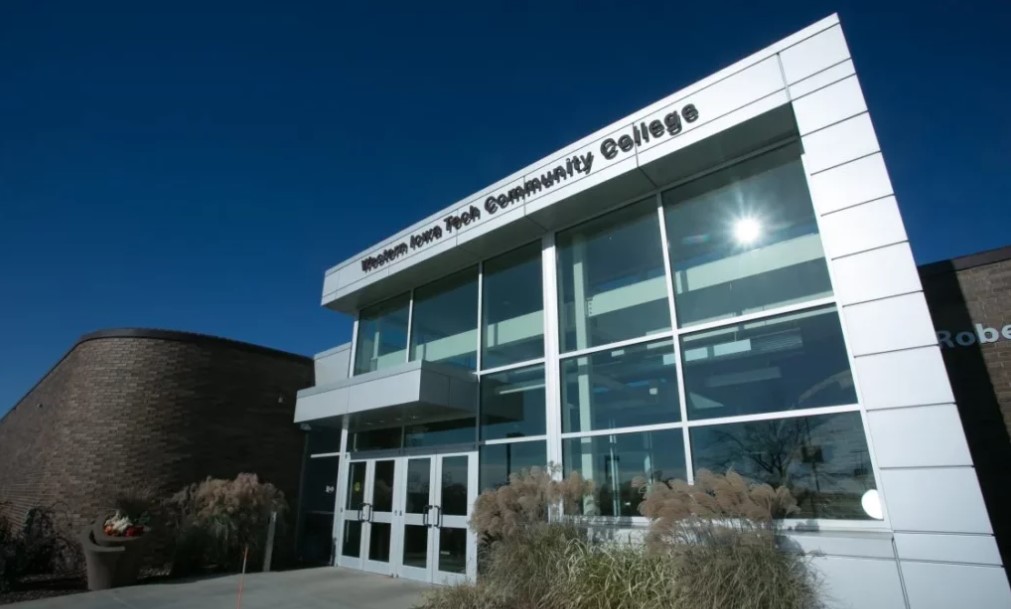
Western Iowa Tech Community College, a community college in Sioux City, Iowa that’s facing two multimillion-dollar lawsuits alleging it engaged in human trafficking is arguing the alleged victims must return to Iowa from Chile to sit for depositions in the case.
The former students say they can’t afford the expense of returning to Iowa and have sought the court’s permission to provide deposition testimony remotely through Zoom-type videoconferencing.
The two lawsuits against Western Iowa Tech Community College were filed in federal court more than three years ago and are scheduled for trial next spring. One lawsuit was filed on behalf of 14 students from Chile, and the other was filed on behalf of 11 other students who mostly originate from Brazil.
The lawsuits allege the school enticed impoverished students to come to Iowa where they were placed in “debt bondage” working at a food-processing plant and pet food factory.
The Sioux City college allegedly procured visas for the students to enroll in the school’s international education program, then steered them to work in the processing plants. The college then diverted money from the students’ paychecks to reimburse the school for the cost of the program, the lawsuits claim.
As part of recent court filings, lawyers for the school note that the plaintiffs are “claiming extraordinarily high damages — damages in the seven-figure range for each plaintiff — in this matter.”
The defendants in the two cases, all of whom have denied any wrongdoing, include the college; several of its employees; Tur-Pak Foods, which runs a food-processing plant in Sioux City; Royal Canin USA, which runs a pet food factory in North Sioux City, South Dakota; and J & L Staffing and Recruiting, which allegedly helped place the students in the two plants at the behest of the school.
Former student: Flight costs two months’ income
As with most civil lawsuits, parties on both sides of the two cases have scheduled depositions for witnesses to provide sworn testimony before any courtroom trial. However, at least seven of the plaintiffs in the case involving the Chilean students have argued that they should be allowed to give their depositions remotely, without returning to Iowa. Of the seven, three are living now in Chile and four are living in Florida.
One former WITCC student, Claudio Ramos of Santiago, Chile, told the court the 5,000-mile flight to Des Moines would take 18 to 24 hours. “I can’t afford the expense of an international flight plus hotel rooms,” he said in a sworn statement. “I am currently employed as a security guard. I make approximately 46,000 Chilean pesos a month, which equals $519.80 per month. I have no savings … The flight alone would cost more than two months’ worth of income.”
Attorneys for the school say most of the students returned to Iowa earlier in the year to sit for psychological evaluations related to their claims against the school. They say the social media accounts of one former WITCC student from Chile show him visiting Zombie Burger, the Greater Des Moines Botanical Garden and 801 Chophouse in Des Moines.
The school’s lawyers also say depositions in the case will be complicated and include “five different law firms, countless attorneys, an interpreter, a court reporter, and a substantial number of documents” drawn from the 100,000 pages of records that have so far been produced.
“Plaintiffs have made incredibly serious allegations against the defendants, including human trafficking, fraud, breach of contract, intentional infliction of emotional distress, and violations of Iowa’s wage payment collection law,” attorneys for the school argued. “Based on the uncommon and egregious nature of plaintiffs’ claims alone, plaintiffs should be required to appear in person for their depositions.”
Lawyers for the Chilean students say some of their clients are currently unemployed, lack a valid passport, or have yet to obtain the necessary visa to return to Iowa and sit for depositions. They also claim that the defendants themselves are responsible for at least some of the limitations on travel the students now face.
For example, one program that allows for quick approval of travel abroad screens out Chileans who may have violated immigration laws by working in unauthorized jobs. That could restrict the travel of former WITCC students who were “trafficked into jobs that they were not legally authorized to perform,” the plaintiffs’ attorneys allege.
The two sides recently reached an agreement to have the former students now living in Florida come to Iowa and complete their depositions in 12-hour sessions structured to minimize their travel expenses.
As for the former WITCC students now in Chile, it remains uncertain as to whether they’ll be granted permission to enter the United States. Their depositions have been delayed to January to give the parties more time to negotiate a resolution.
Meatpacking work branded as ‘culinary arts’
Currently, the two civil cases are expected to go to trial between April and June of 2024. Each of the defendants has denied wrongdoing, and the school has stated that any damages the students suffered “were caused by or contributed by their own actions.”
The first of the lawsuits was filed in late 2020 and has survived a broad array of legal challenges mounted by the defendants. Chief Judge of the U.S. District Court for the Northern District of Iowa Leonard T. Strand dismissed claims of racketeering and indentured servitude against the defendants in one case, but let stand several counts alleging human trafficking, breach of contract, fraud, and, concerning the school, the intentional infliction of emotional distress.
“WITCC specifically prohibited (the students) from seeking other employment without permission, making their labor for Tur-Pak or Royal Canin the only way they could provide for themselves,” Strand stated in his ruling. “The (students) are foreign nationals with varying levels of proficiency in English. They all made financial sacrifices to be a part of the program, with several of them selling nearly everything they owned prior to enrolling in the program.”
The lawsuits allege that WITCC recruited the students with the promise of an education as well as work in the culinary arts or robotics industries. However, the culinary arts program students signed up for was allegedly rebranded as a “food service diploma program” and the robotics program students signed up for was rebranded as an “electromechanical technician program.”
After arriving in Iowa, the students were put to work on meatpacking production lines to help fill a labor shortage in western Iowa. Some of the students had to work 12-hour overnight shifts and then report to class by 8 a.m., one of the lawsuits alleges.
The school allegedly arranged for J & L to put the students to work at Tur-Pak and Royal Canin. The arrangement allegedly called for the two companies to pay $15 an hour for the students’ labor, with $7.75 an hour of that routed to the college to offset the expense of the students’ housing, tuition and fees.
No criminal charges have been filed in the case.
Deputy Editor Clark Kauffman has worked during the past 30 years as both an investigative reporter and editorial writer at two of Iowa’s largest newspapers, the Des Moines Register and the Quad-City Times. He has won numerous state and national awards for reporting and editorial writing.
The Iowa Capital Dispatch is a nonprofit organization, free of advertising and free to readers. That means your donations are vital and your money goes directly to paying for quality journalism. We also make our work available to your community newspapers and other media outlets.
The Capital Dispatch is part of States Newsroom, a national 501(c)(3) nonprofit supported by grants and a coalition of donors and readers. We retain full editorial independence.
 The Siouxland Observer
One thought on “WITCC wants to depose alleged human trafficking victims in Iowa”