

By Joshua Haiar, South Dakota Searchlight
January 16, 2025
PIERRE — The state of South Dakota has received notice that it could be sued by McCook Lake property owners, who say their community suffered catastrophic damage as a direct result of flood diversion efforts carried out by state and local officials.
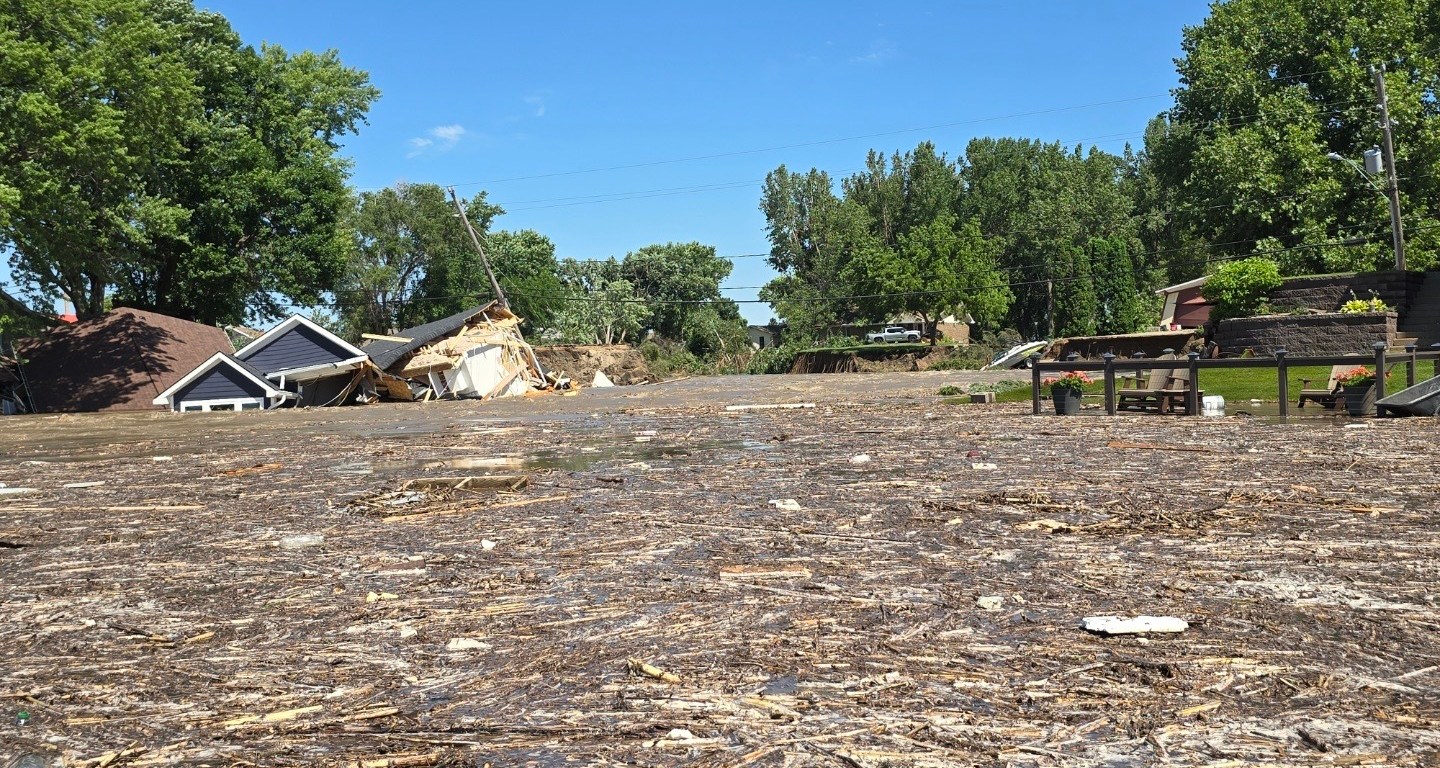
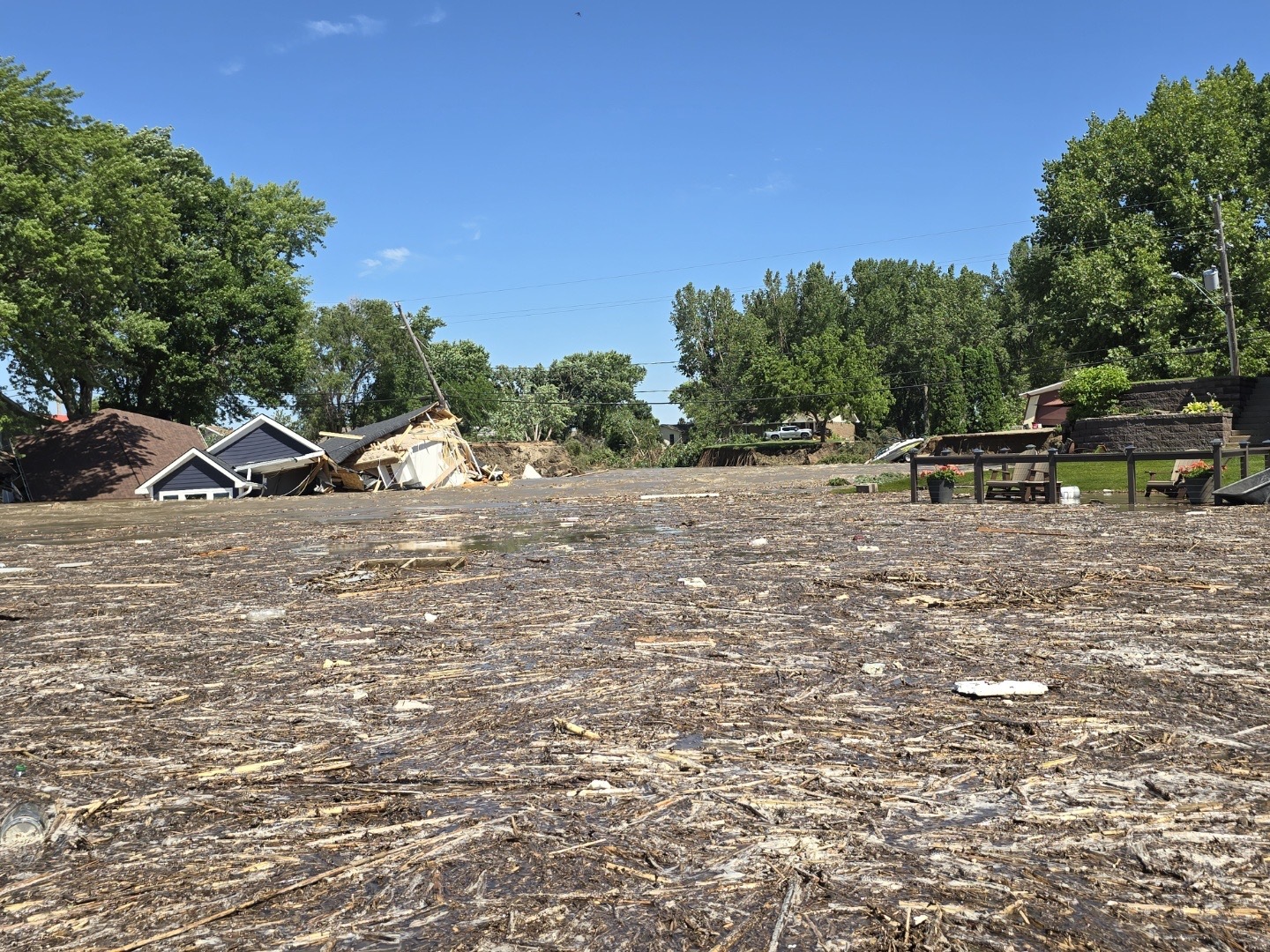
In June, record rainfall fueled a record flood that destroyed or damaged dozens of homes in McCook Lake. It also carved deep scars in the land, uprooted trees and disrupted utilities.
Some residents said they were blindsided by the results of a temporary levee that the state helped local authorities construct across Interstate 29 to divert Big Sioux River water toward the lake. The temporary levee connected with permanent levees is part of a system designed to send overflow water into the lake, which could drain toward the Missouri River. The plan had been executed before, but never with so much water coming down the Big Sioux.
Some state and local authorities have defended the action as necessary to prevent a bigger catastrophe in nearby and more-populated North Sioux City and Dakota Dunes.
Hunter Roberts, secretary of the state Department of Agriculture and Natural Resources, mentioned the potential litigation Thursday while appearing before a legislative committee at the Capitol.

State Sen. Kevin Jensen, R-Canton, asked Roberts about allegations that the state decided to sacrifice the McCook Lake area to save North Sioux City and Dakota Dunes.
“The state is going to get sued over this,” Roberts said. “So, I don’t think it’s in our best interest to go into the weeds on this.”
Roberts said modeling indicated that the levee added 8 inches of water to McCook Lake, but was not responsible for all of the “8-plus feet of water that went through there.” He added that local officials made the decision to build the temporary levee.
“North Sioux is the one that made that final determination,” Roberts said. “We executed.”
Some residents said they were not properly warned of the severity of the flooding and didn’t realize floodwaters were being diverted toward them or what the impact would be.
On the afternoon of the June 23 nighttime flood, local, state and federal authorities held a press conference in North Sioux City. None of the authorities in attendance clearly explained that the temporary levee was intended to direct Big Sioux River floodwaters toward McCook Lake.
When somebody in the audience asked what McCook Lake residents should do, Gov. Kristi Noem said they should protect their personal property, “because we do anticipate that they will take in water.”
“That’s what we’re preparing for,” Noem said during the press conference. “If we don’t, then that’s wonderful that they don’t have an impact, but they could see water flowing into McCook Lake.”
Noem flew out to a political fundraiser in Tennessee that evening. While she was there, water suddenly swamped homes around McCook Lake, causing residents to frantically flee and triggering rescue efforts by emergency responders.
Noem declined to call out the National Guard for the flood preparation or response, saying it would be “extremely expensive” and that the Guard should only be used for “a very crisis situation.”
McCook Lake resident Morgan Speichinger, whose house was inundated, said the flood was devastating.
“So, the community down here got together and are filing a lawsuit,” she said Thursday.
South Dakota Searchlight obtained a copy of the formal notice of claim sent to the state. The notice is a procedural step that provides the defendant in a potential lawsuit the opportunity to investigate and respond to the claim prior to litigation.
The notice attributes the execution of the flood diversion plan to the state departments of Transportation, Public Safety and Emergency Management, as well as Union County and its Department of Emergency Management, and North Sioux City.
Noem defended the handling of the flood Tuesday during her State of the State address.
“We know that planning can only go so far in preparing for a 1,000-year flood,” she said.
She also announced a group of state and local officials who responded to the flood as recipients of her Governor’s Award for Heroism.
On Friday, Noem will appear in Washington, D.C., for a hearing on her nomination to lead the U.S. Department of Homeland Security. The department includes the Federal Emergency Management Agency, known by the acronym FEMA.


Images of the June 23, 2024, McCook Lake flooding and aftermath.
Joshua Haiar is a reporter based in Sioux Falls. Born and raised in Mitchell, he joined the Navy as a public affairs specialist after high school and then earned a degree from the University of South Dakota. Prior to joining South Dakota Searchlight, Joshua worked for five years as a multimedia specialist and journalist with South Dakota Public Broadcasting.
South Dakota Searchlight is part of States Newsroom, the nation’s largest state-focused nonprofit news organization.
 The Siouxland Observer


