
DOC Secretary says part of the nursing shortage is due to nurses feeling unsafe at work
By Makenzie Huber, South Dakota Searchlight
January 23, 2025

PIERRE — The South Dakota Department of Corrections is searching to fill 63 vacant medical staff positions, department officials told lawmakers Thursday at the Capitol. That’s a vacancy rate of 53% among licensed practice nurses and 40% among registered nurses.
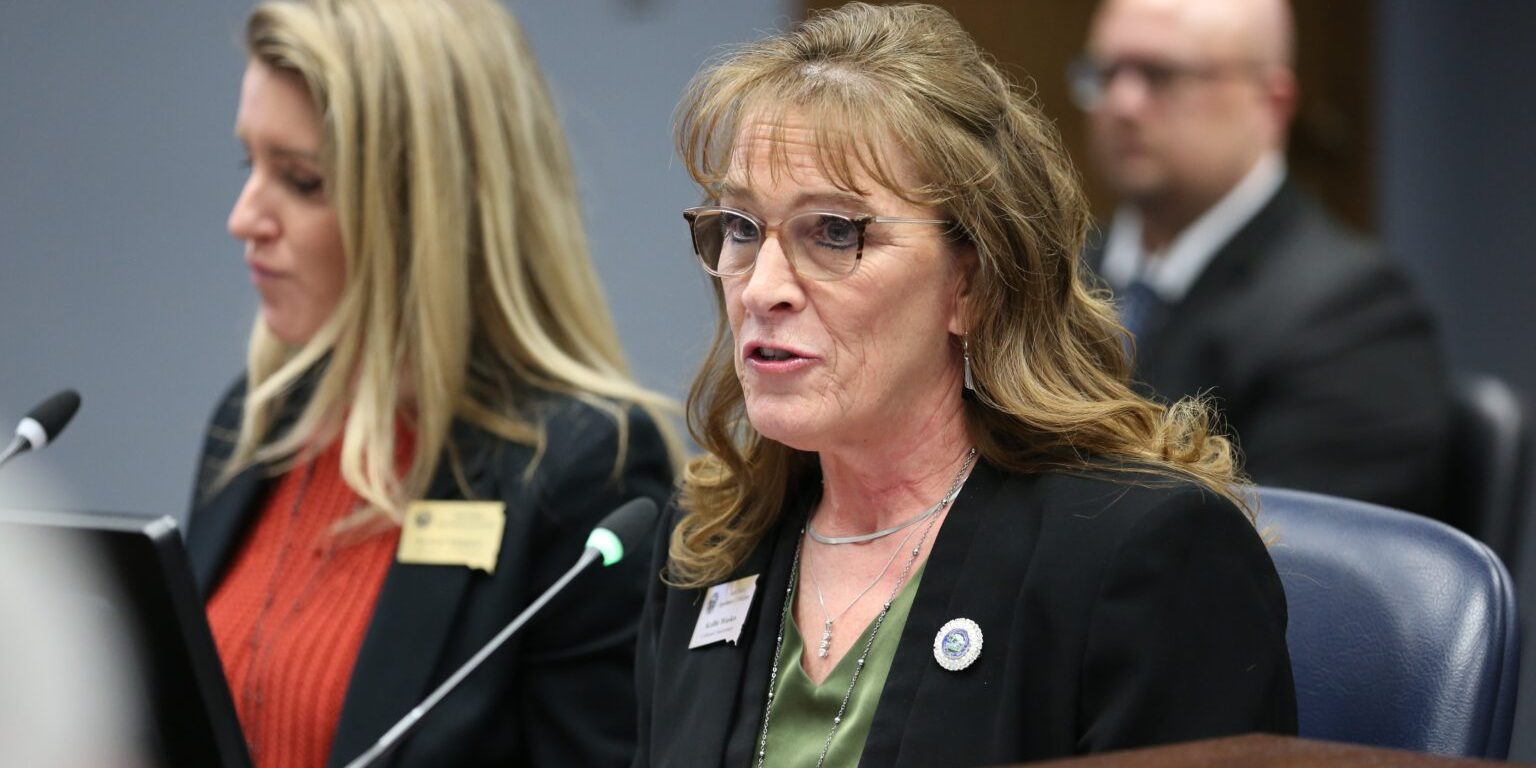
Both rates are greater than the 27% average among security staff in 2022, which garnered headlines at the time. Three years later, the prison system’s security staff vacancy rate averages 10%, department Secretary Kellie Wasko said. She attributes the stabilization to wage raises and policy changes.
“Nobody wants to be verbally demeaned or have feces and urine thrown on them. Our current environment creates that.”
South Dakota Department of Corrections Secretary Kellie Wasko
Part of the department’s nursing shortage is due to nurses feeling unsafe at work, Wasko told lawmakers. Competing with the private sector is also becoming more difficult since there is a nationwide nursing shortage.
Prison clinical staff are responsible for providing inmate medical care, including medical assessments and medications. Wasko, who started in the corrections industry as a registered nurse, said she did sutures, treated stab wounds, changed dressings and did post-operative care in her decade of prison nursing experience.
“No one wants to go somewhere they don’t feel safe,” Wasko said. “And this goes for the correctional staff as well. Nobody wants to be verbally demeaned or have feces and urine thrown on them. Our current environment creates that.”

Wasko said the unsafe environment is due largely to the antiquated nature of the penitentiary in Sioux Falls, one of the state’s eight prison facilities. Parts of the penitentiary date back to 1881.
She also updated lawmakers on plans to replace the penitentiary with a new prison 15 miles south of Sioux Falls. She told lawmakers the new Lincoln County men’s prison is needed to replace the penitentiary, ensure safe working environments and better provide programming for inmates.
Wasko pulled back on benefits when she first started with the department due to “fiscal responsibility” concerns.
“I think I made the wrong decision in pulling those back from staff,” Wasko said.
The department is working to reimplement those benefits and make other changes to improve conditions for medical staff within the prison system. The department offers a loan repayment and scholarship program and $10,000 sign-on bonus for prison nurses. It also offers a $5 wage increase for overnight nursing shifts.
A registered nurse’s salary in the department ranges from $28 to $40 an hour, depending on experience and the security level within the prison, according to department job postings.
To fill vacant positions, the department has contracted travel nurses. Anticipated travel nurse expenses for this fiscal year, which runs through June, stand at $4.6 million, said department Finance Director Brittni Skipper. That’s a 48% increase from $3.1 million spent in fiscal year 2024.
The state Department of Health managed prison clinical services and staffing before the Department of Corrections took it over in fiscal year 2024.
The department is requesting a clinical services budget, which includes care inside prison facilities and specialized care at typical healthcare facilities, of $38.2 million for the fiscal year 2026 — an increase of $954,731. Wasko said that the increase is driven by anticipated prison populations.
Inmates visited system healthcare clinics an average of 6,283 times a month in fiscal year 2024, according to the department’s statistical report.
Makenzie Huber is a lifelong South Dakotan who regularly reports on the intersection of politics and policy with health, education, social services and Indigenous affairs. Her work with South Dakota Searchlight earned her the title of South Dakota’s Outstanding Young Journalist in 2024, and she was a 2024 finalist for the national Livingston Awards.
South Dakota Searchlight is part of States Newsroom, a nonprofit news network supported by grants and a coalition of donors as a 501c(3) public charity. South Dakota Searchlight maintains editorial independence. Contact Editor Seth Tupper for questions: info@southdakotasearchlight.com.
 The Siouxland Observer