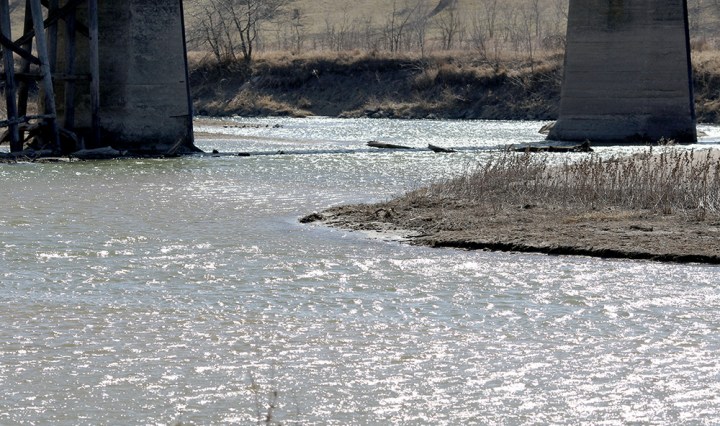

Referred pipeline law puts company’s permit quest in limbo

The permit process and ballot referral highlight the emergence of carbon pipelines and landowner rights as political flashpoints in South Dakota. Summit Carbon Solutions seeks a permit for a network of carbon capture pipelines, and a citizen-led referral challenges a legislative package known as the “Landowner Bill of Rights.” The referendum will give voters a direct say in pipeline policy. Continue reading Referred pipeline law puts company’s permit quest in limbo

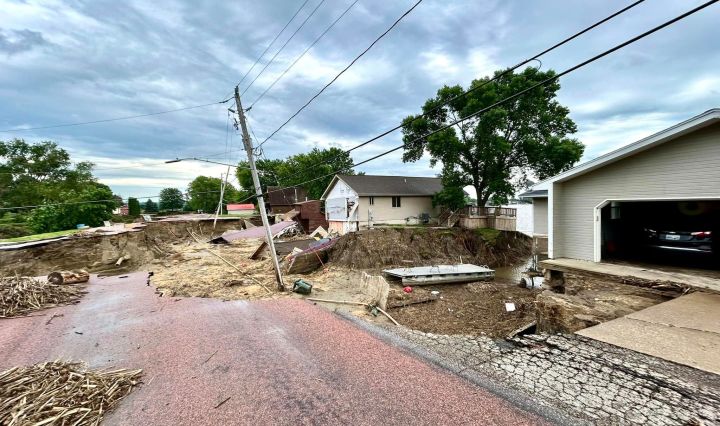
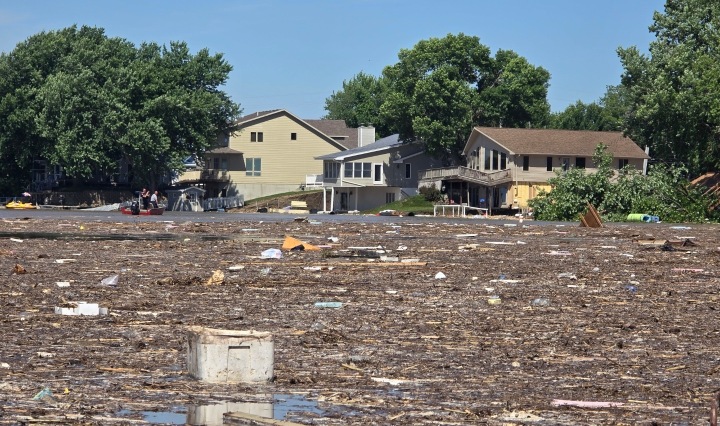
McCook Lake catastrophe shatters complacency around old flood plans

Victims, scientists, and researchers in South Dakota call for recognition of climate and land use changes following a devastating flood. The outdated flood mitigation plan led to destructive consequences in McCook Lake, highlighting the need for updated plans and infrastructure to address the increasing frequency and severity of floods. Urban development and changing river flows are contributing factors, requiring updated zoning laws and design standards to mitigate future flood hazards. Continue reading McCook Lake catastrophe shatters complacency around old flood plans

Flood washes away Noem’s false veneer of leadership

Severe weather in southeast South Dakota exposed Governor Kristi Noem’s shortcomings as she left the state for a political conference and interview, neglecting to adequately warn people about the impending danger. Despite her lackluster crisis response and departure for a fundraiser, she defended her actions, leaving many to question her priorities and leadership. Continue reading Flood washes away Noem’s false veneer of leadership

McCook Lake residents say their homes were sacrificed, and they want a new flood plan

Homeowners allege inadequate warnings, authorities defend communication in the face of record floodwaters at McCook Lake, South Dakota. State and local authorities executed a flood mitigation plan, but some residents claim insufficient warnings. Cleanup and future plans are now in question as the community grapples with the aftermath of the devastating flood. Continue reading McCook Lake residents say their homes were sacrificed, and they want a new flood plan

EPA data: South Dakota industrial chemical releases rise amid national decline

Most mountain and plains states have seen reductions in pollutants released to the air, water and soil since 2013 at a rate of decline more than double the national average.

In South Dakota, though, toxic releases increased by 16%.

That’s according to recently published 2022 data from the U.S. Environmental Protection Agency’s Toxics Release Inventory. Continue reading EPA data: South Dakota industrial chemical releases rise amid national decline

Warmer weather at Okoboji: What it means for the lakes and those who use them

The ice on Spirit Lake went out this year on March 3.

From 1944, when the record-keeping began, through 1981, the ice went out in the latter half of April about once every third or fourth year.  Since 2001, the ice has gone out in the latter half of April only once.

Looking at it another way, the ice cover on Spirt Lake has been decreasing in terms of how long it lasts each year for the past quarter-century or so.

The obvious conclusion is that the water temperatures in the Iowa Great Lakes are getting warmer, a result of ongoing global warming, which is part . . .
Continue reading Warmer weather at Okoboji: What it means for the lakes and those who use them

More than half of Iowa’s tested streams and lakes are ‘impaired’

There are at least 721 water body segments in Iowa that do not meet water quality standards for recreation, public water supplies and the protection of aquatic life, according to the state Department of Natural Resources.

The DNR has drafted its latest list of “impaired” waters that it is required to submit to the U.S. Environmental Protection Agency every two years. The list is based on data collected by the department and numerous other entities between 2020 and 2022, and it is used to guide restrictions for stream pollution for Continue reading More than half of Iowa’s tested streams and lakes are ‘impaired’

Winnebago Tribe to get back 1,600 acres of land once taken for proposed recreation area along Missouri River

By Paul Hammel, Nebraska Examiner The Winnebago Tribe of Nebraska stands to receive 1,600 acres of land that were taken a half-century ago for a recreation area that never materialized. The land, on the Iowa side of the Missouri River, would be returned under a bill introduced recently in the U.S. Senate by U.S. Sen. Deb Fischer and her fellow Iowa and Nebraska senators — Pete Ricketts, Chuck Grassley and Joni Ernst. The chairman of the Winnebago Tribe, Victoria Kitcheyan, said the return will be a “historic and beautiful moment” for her tribe, whose reservation is located north of Omaha. … Continue reading Winnebago Tribe to get back 1,600 acres of land once taken for proposed recreation area along Missouri River

Less rain results in a cleaner Big Sioux River, report says

Less precipitation means less pollution is running into the Big Sioux River, according to a 2023 water quality report. “You can see a pretty strong correlation between the amount of rainfall and water quality,” Friends of the Big Sioux River’s Emily Oyos said. “A very direct correlation.”

“We had a significantly less amount of rain than 2022, and that has resulted in better numbers,” said Rachel Kloos, with Friends of the Big Sioux River. Otherwise, the results reveal many of the same problems as in past years. Continue reading Less rain results in a cleaner Big Sioux River, report says